
How to rank in ChatGPT: find out if your company appears in AI answers
Asking ChatGPT “have you heard of us?” tells you very little. This is the method we run every month to check whether a company appears when buyers ask about its industry, what we found when we measured ourselves and what to do next.
Using tools such as ChatGPT, Perplexity and Gemini to research companies, products and suppliers is becoming increasingly common. And the industrial sector is no exception.
Imagine a purchasing manager looking for a manufacturer of planetary gearboxes. They probably already understand the product and its technical specifications. What they need to know is which companies manufacture them, which suppliers operate in their region, whether they have experience in their industry and what alternatives exist to their current supplier.
Until recently, much of this research would have started on Google. Today, it might begin with a conversation with an AI assistant.
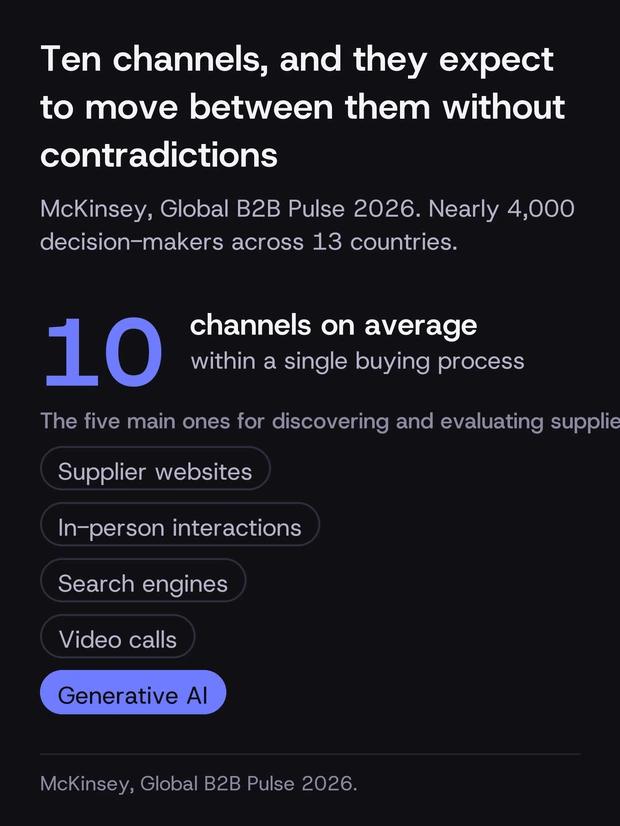
This raises an interesting question for any B2B company: what happens when a potential customer asks an AI tool to recommend manufacturers or suppliers in your industry? Does your company appear among the suggestions?
The good news is that you can find out without investing in specialised software. What matters is having a consistent method that provides useful information and allows you to compare results over time.
At saKudarte, we’ve started measuring our own visibility across AI tools. In this article, we’ll explain how we approach it, what we’ve discovered and some of the mistakes we’ve made along the way.
What does visibility in ChatGPT and other AI tools actually mean?
The first step is understanding what we’re trying to measure.
One of the most common approaches is to open ChatGPT and ask directly about your business:
“Have you heard of XYZ Industries?”
The problem is that this question tells us very little about our actual visibility. By including the company’s name, we’re already giving the AI a specific reference to work with.
What we really want to know is something different: whether the AI identifies and recommends our company when someone searches for manufacturers, suppliers or services in our industry without already knowing our brand.
For example, a precision machining company might test questions such as:
- “Which companies provide precision machining services for the aerospace industry in Spain?”
- “Which manufacturers offer CNC machining for small production runs?”
- “Which Spanish suppliers have experience manufacturing components for industrial machinery?”
These questions are much closer to what a potential buyer might actually ask.
They also help uncover something that can be even more revealing than whether the company appears: how the AI understands its business, which services it associates with the company and which sources it uses to support its recommendations.
Because appearing in an AI-generated answer is useful, but appearing with incorrect information could create the wrong impression before a potential customer has even visited your website.
How to measure your company’s visibility in ChatGPT, Perplexity and Gemini
You don’t need paid software to start evaluating your company’s visibility in AI-powered search.
A useful initial assessment can be carried out manually by preparing a set of relevant questions, recording the responses and repeating the process regularly.
This is the approach we use at saKudarte.
1. Identify the questions your potential customers would ask
Start by preparing between ten and fifteen questions related to your products, services and target markets.
Try to think like someone looking for a supplier who has never heard of your company.
A good starting point is the questions your sales team regularly receives, the needs customers mention during meetings or searches related to specific industrial applications.
For example:
- Who are the leading manufacturers of [product] in Spain?
- Which companies manufacture [product] for the [industry] sector?
- Which suppliers of [product] hold [standard] certification?
- What alternatives are available to [well-known manufacturer or supplier]?
- Which companies provide [industrial service] in [region or country]?
For companies operating internationally, it’s worth preparing questions in the languages of their main export markets.
This is particularly relevant in industrial marketing, where a company’s digital presence may vary considerably between Spain, France, Germany and the UK.
Once you’ve selected your questions, keep them consistent in subsequent assessments. You can always add new ones, but retaining the original set makes it easier to track changes over time.
2. Choose which AI tools you want to analyse
We often talk about AI search tools as though they all work in the same way. In practice, there are important differences in how they obtain and present information.
For an initial assessment, you can use ChatGPT, Perplexity and Gemini, taking into account how each tool generates its responses.
ChatGPT without web search. When ChatGPT responds without searching the web in real time, it relies on information available in the model and the context of the conversation. This can help you understand whether the tool recognises your company and how it describes your business. However, it doesn’t tell you exactly where or when that information was obtained.
ChatGPT with web search. When web search is enabled, ChatGPT can consult current web pages and provide links to supporting sources. This allows you to explore what information it finds about your company, which pages it considers relevant and whether it relies on your own website or external sources.
Perplexity. Perplexity is particularly useful for this type of analysis because it includes references to the sources used in its answers. You can identify which websites support its recommendations and check whether your company appears in specialist articles, industry directories or sector-specific content.
Gemini and Google’s AI-powered search results. It’s also worth examining how your company appears across Google’s AI experiences, including Gemini and AI-generated answers within Google Search. However, these should be assessed separately, as they don’t necessarily recommend the same companies or use sources in the same way.
There’s no need to analyse every platform from day one. ChatGPT and Perplexity provide a reasonable starting point, and you can expand your assessment later.
3. Record mentions, descriptions and sources
A simple spreadsheet is enough to organise your findings.
For each question, record the date, the AI tool used and four key details:
- Company mentions. Whether your company appears in the answer or is explicitly recommended.
- Position and context. Where it appears in the response, when a ranked list is provided, and which competitors are mentioned alongside it.
- Company description. What the AI says about your services, specialisation and experience.
- Sources and links. Which web pages are cited, distinguishing between links to your own website and references to external sources.
We find the fourth point particularly interesting.
Imagine ChatGPT recommends your company but uses information published five years ago in an industrial directory. The description might be outdated or fail to reflect your current capabilities.
Or perhaps your business appears alongside its main competitors, but the links in the answer point exclusively to those competitors’ websites.
Both situations provide useful insights that can inform your marketing and search visibility strategy.
It’s worth remembering, though, that a citation doesn’t necessarily reveal every source that contributed to an AI-generated answer. It’s a useful clue rather than a complete explanation of how the response was produced.
4. Repeat the tests to track changes over time
AI-generated answers aren’t completely consistent.
The same question can produce different recommendations depending on the date, model configuration, conversation history, location or sources available at that moment.
That’s why a single response isn’t enough to draw reliable conclusions about your company’s AI visibility.
A better approach is to run several tests for each question under similar conditions and repeat the assessment periodically.
We carry out a monthly review using a fixed set of questions. We also record the platform and date and try to maintain consistent testing conditions.
This makes it easier to identify changes that might otherwise go unnoticed.
For example, you might find that your company starts appearing regularly in searches related to a particular industrial application, that descriptions of its services become more accurate or that your website begins to appear among the cited sources.
These developments are worth investigating, although they shouldn’t automatically be interpreted as an overall improvement in AI search visibility.
What we discovered when we measured our own AI visibility
In September 2026, we carried out our first assessment at saKudarte using questions related to industrial and B2B marketing.
We wanted to know whether we appeared among recommended agencies, how our services were described and which sources AI tools were using to talk about us.
The findings were more interesting than we expected.
Our previous website was still influencing how AI described us
We had redesigned our website and updated the way we presented our services. However, some AI-generated responses were still describing saKudarte using information from our previous site.
When we reviewed the available references, we discovered that some of that older content was still published elsewhere.
We had updated our own messaging, but not every digital platform mentioning our brand reflected those changes.
This is something many industrial companies may recognise.
A manufacturer might introduce new production lines, obtain certifications, expand its technical capabilities or move into new markets. If those developments aren’t reflected across its digital presence, potential customers may continue finding an incomplete picture of the business.
AI tools create another way for that outdated information to resurface.
We needed more published case studies
Another discovery came when we found an article listing the best industrial marketing agencies in Spain.
Our company wasn’t included, even though we met three of the four criteria outlined in the article.
The area where we had room for improvement was the availability of verifiable results through published case studies.
We had been working on industrial and B2B marketing projects for years, but much of that experience hadn’t been properly documented on our website.
So we decided to address it.
We’ve now published sixteen case studies explaining the initial situation, the work carried out and the results achieved.
Does that mean ChatGPT will automatically start recommending us? Of course not.
But it does mean that potential customers, search engines and AI systems with access to that content can find more specific information about our experience.
Our next assessment will help us see whether those changes have had any effect.
Searches in English revealed a different picture
The third discovery was related to international visibility.
When we tested questions in English, some of the routes leading to saKudarte relied primarily on specialist agency directories rather than our own website.
In other words, the information used to identify our company changed depending on the language of the question.
That’s interesting for a B2B marketing agency. For an industrial manufacturer exporting a significant proportion of its production, it could be even more relevant.
It’s worth asking whether a German, French or American buyer finds the same information as a Spanish buyer when researching suppliers in your industry.
Translating your website is only part of the equation. You also need to understand which content is accessible and relevant in each market and which external sources mention your company.
Common mistakes when measuring AI search visibility
During our initial tests, we made several mistakes that led us to refine our approach.
The most obvious was asking questions that included our company name. As we’ve already seen, this can help assess what an AI tool knows about your brand, but it doesn’t show whether it would recommend you without being prompted.
We also found that changing questions between assessments made comparisons difficult. If we ask about industrial marketing agencies in September and digital strategy consultancies in October, any difference in the results may simply reflect the different questions.
Another mistake was placing too much importance on a single answer. Recommendations can change even when the same question is repeated, so several observations are needed before interpreting a shift.
Finally, we learned to distinguish between being mentioned and having our website cited.
An AI tool can recommend a company without linking to its website. Equally, it might cite an article mentioning the company without including it among its main recommendations.
Both situations provide useful information, but they should be recorded separately.
How to improve your company’s visibility in ChatGPT and other AI search tools
Once you’ve completed your assessment, the next step is deciding what to improve.
The actions will depend on what you’ve discovered. In our case, the process highlighted three areas worth reviewing.
Keep your company information accurate and consistent
If AI tools describe your company using outdated or incorrect information, it’s worth checking how your business is presented across different digital channels.
Your corporate website is the starting point, but LinkedIn profiles, Google Business Profiles, industry directories and other platforms where your company appears also deserve attention.
Your company name, areas of expertise, location, services and contact details should be consistent.
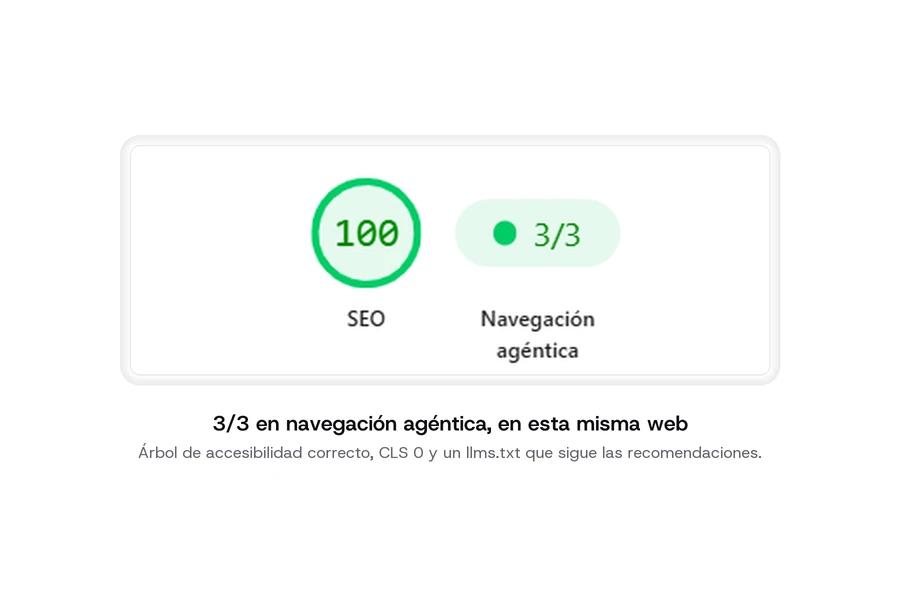
Structured data using Schema.org can also help search engines interpret certain information on your website.
At saKudarte, we also maintain an llms.txt file containing a company summary and links to relevant pages. However, adoption of this format by AI systems is not yet widespread, so it shouldn’t be treated as a guarantee of visibility.
Publish content that demonstrates your experience
Industrial marketing is full of companies talking about quality, innovation, commitment and tailored solutions.
The problem is that these claims, on their own, tell potential customers very little about what actually makes one supplier different from another.
A well-documented case study can be far more valuable.
Consider an industrial components manufacturer explaining how it solved a specific customer problem, which technical requirements had to be met, how the project was approached and what results were achieved.
That information helps buyers evaluate the manufacturer’s capabilities. It also provides specific content that search engines and AI tools may use when it’s available to them.
The aim isn’t simply to publish case studies to appear in ChatGPT. It’s to make your existing experience easier to find and understand.
Create pages that answer real industry questions
Another area we review is whether our website actually answers the questions potential customers are asking.
It’s common to find industrial websites with extensive technical information but relatively little content explaining applications, industries or specific customer challenges.
A company might describe a machine’s specifications in considerable detail while barely explaining which manufacturing processes it supports, what problems it solves or what experience the company has in particular sectors.

Developing this type of content makes the website more useful to buyers and can also improve its discoverability through traditional search engines and AI-powered tools with web access.
In that sense, AI SEO shouldn’t be seen as something completely separate from traditional search engine optimisation.
Many of the fundamentals remain the same: an accessible website, well-organised information, relevant content, authority and trustworthy external references.
What is changing is how people discover and consume that information.
Can you track your company’s ranking in ChatGPT?
This is one of the questions that generates the most interest when discussing AI search visibility.
And the answer needs some qualification.
With traditional search engines, we can track rankings for specific keywords, even though those results may vary.
ChatGPT, Perplexity and Gemini don’t have a universal, stable ranking of companies equivalent to Google’s organic search positions.
Their answers can change depending on the question, context, location, sources consulted and version of the tool.
That’s why calculating an average position or share of visibility requires a clear definition of what is being measured.
Some specialist platforms offer metrics of this kind, but they should be understood as estimates based on a particular sample of queries and responses, rather than absolute measurements.
Our approach is simpler.
We prefer to maintain a representative set of questions and monitor how our presence changes over time, what information appears about our company and which sources are used.
It doesn’t provide a comprehensive picture of every possible AI-generated recommendation. But it does give us a reasonable starting point for identifying problems and deciding what to work on.
Why AI search visibility matters for industrial B2B marketing
In industrial companies, purchasing decisions can take months and involve procurement managers, engineers, production teams and senior management.
During that process, buyers consult different sources to identify suppliers, compare capabilities and evaluate alternatives.
AI tools are becoming part of that research process, although their importance varies depending on the industry, market and buyer profile.
That’s why we believe AI search visibility deserves a place within a B2B marketing strategy, alongside the other channels that already help generate business opportunities.
We don’t need to become obsessed with appearing in every ChatGPT response. We need to understand what potential customers can find about our company and whether that information accurately reflects what we do.
That’s where regular monitoring can make a difference.
At saKudarte, the process has helped us identify outdated information, opportunities to improve our content and differences between markets that we might otherwise have overlooked.
We still need to see how the results evolve and whether the changes we’ve made have an impact.
In the meantime, there’s one question worth considering: if a purchasing manager asked ChatGPT today to recommend the leading suppliers in your field, would your company appear?
And if it did, would the description reflect the business you’ve worked so hard to build?
Perhaps it’s worth finding out.
Frequently asked questions about ranking in ChatGPT
Can you rank in ChatGPT the way you rank in Google?
Not in the same way. There is no stable ranking and no position to climb: there is a probability that your company appears in an answer, and it depends on how much verifiable, consistent information about you exists in sources the model can read. What does look similar is the groundwork: content that answers real questions, structured data and a consistent entity.
How often should you measure?
Once a month is enough to see a trend without turning it into a full-time job. What matters is not the frequency but that the list of questions and the surfaces stay the same every time.
Is llms.txt worth anything?
It is a text file summarising what your company does and which URLs matter, meant to be read by a model without wrestling with HTML. No search engine has confirmed using it as a signal, so do not expect a measurable effect on its own. It costs little to add and maintain, and for now we treat it as what it is: a cheap bet, not a solution.
What if my competitor appears and I do not?
Look at which URL the AI cites when it names them. In most cases there is no magic: they have published cases, product pages explaining applications, presence in sector directories or mentions in media the model has read. That is replicable.
Do you need a paid tool?
Not to start. A spreadsheet with the questions, the surfaces and the four data points per answer will last you several months. Tools save time once the list grows or when you have to watch several markets at once.
This article is part of our AI search visibility.