
AI SEO agency for B2B and industrial companies
Your next customer may ask ChatGPT who makes what they need. If the answer leaves you out, it is not that you rank badly: it is that it did not understand you.
Making it possible for a machine to explain what you do
A language model does not index like a search engine: it reads, summarises and decides who to name. Getting into that answer takes more than having content; it needs to be interpretable, verifiable and attributable.
The work is about letting AI:
- Understand what you do, who for and how you differ, without having to infer it.
- Find specific data it can cite: capabilities, sectors, certifications, real cases.
- Attribute that information to your name, instead of summarising a competitor who explains it better.
AI visibility diagnosis
What ChatGPT, Gemini or Perplexity answer today when asked about your sector, and whether you appear. It is the starting point and can be requested on its own.
Interpretable content
Clear answers to specific questions, with the data next to the claim. A model cites what it can verify, not what sounds good.
Structure and markup
Structured data, coherent hierarchy, llms.txt and a well-formed accessibility tree. This is the part that decides whether you can be read at all.
Mention tracking
Measuring whether you appear, which words describe you and who gets named instead. Without this, GEO is an opinion.
What GEO is, and how it differs from SEO
GEO stands for Generative Engine Optimization, and it describes the work of appearing in answers generated by artificial intelligence rather than in a list of results.
The practical difference from SEO is not the technique: it is the shape of the answer. A search engine returns ten links and the user chooses; a model returns one answer and, with luck, two or three sources. Where there used to be ten slots, now there is one or none.
That changes what you optimise for. In SEO you fight for a position; in GEO you fight to be the source the machine considers reliable enough to make a claim. It is closer to being cited than to being found.
What does not change: you still need a fast, well-structured website with content that says something. GEO does not replace SEO, it leans on it. Almost everything that helps a model understand you better also helps a search engine understand you better.
How to work on visibility in ChatGPT
The first step is to look. Before changing anything, ask the models about your sector, your kind of product and your competitors, and write down what they answer: whether they name you, how they describe you and where they seem to have got it from.
Two problems almost always show up. First, that public information about the company is scarce or vague, so the model fills the gap with generalities. Second, that what does exist was written to persuade a person, not so a machine could cite it without getting it wrong.
From there the work is concrete: turning capabilities into verifiable claims, putting the data next to the sentence it supports, structuring the site so every question has a findable answer, and publishing openly what the company knows.
And measuring. There are no positions to check, so you measure by asking: the same questions, at regular intervals, noting whether you appear and in what words.


An agency you can check before hiring
In a service this new, with little proof available anywhere, the best reference we can give is our own website.
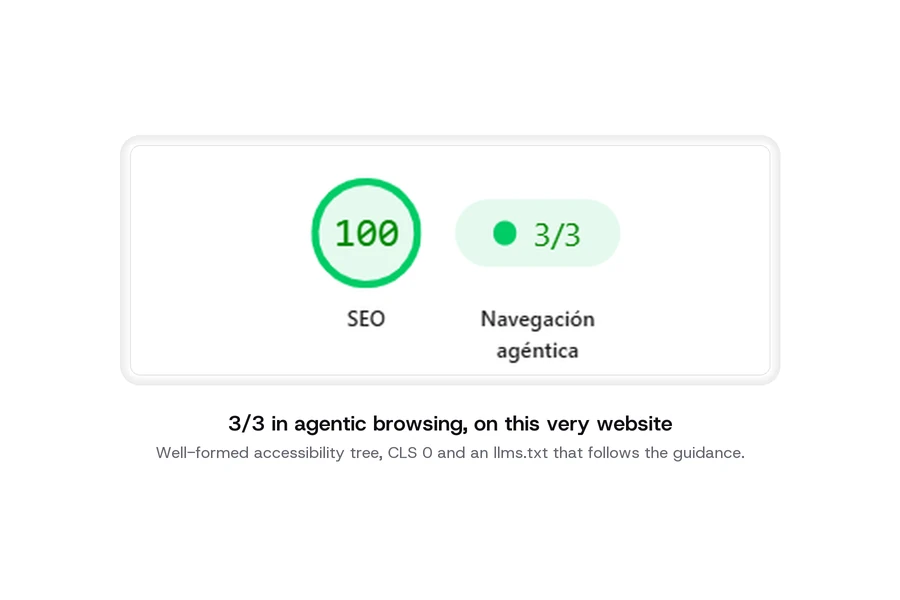
PageSpeed Insights gives this page 3/3 in agentic browsing, the audit Google added to check whether an automated agent can use a site. The three things it passes are a well-formed accessibility tree, a CLS of 0 and an llms.txt that follows the guidance. Ours was published on 3 July 2026, four months before that audit existed, because the reasoning was already clear.
You can check it right now on PageSpeed Insights: it is a public link, not a screenshot of ours.
And if you want the detail, we tell it with the figures in our article on moving off WordPress, including what we cannot measure.
AI visibility inside the B2B Marketing System
It is not a separate channel
GEO does not hold up without what sits underneath. It needs a fast, well-structured website, content that answers real questions, and a value proposition you can summarise in two sentences without losing anything. If that is missing, no amount of markup will fix it.
That is why we work on it inside a B2B Marketing System, alongside B2B SEO, with which it shares almost the entire technical base. Splitting them into two quotes reads well in a proposal and makes little sense in practice.
If somebody asks an AI about what you do…
It is worth knowing what it answers before a customer finds out.
Find out whether AI is naming you
Request a quoteReal cases from industrial B2B companies
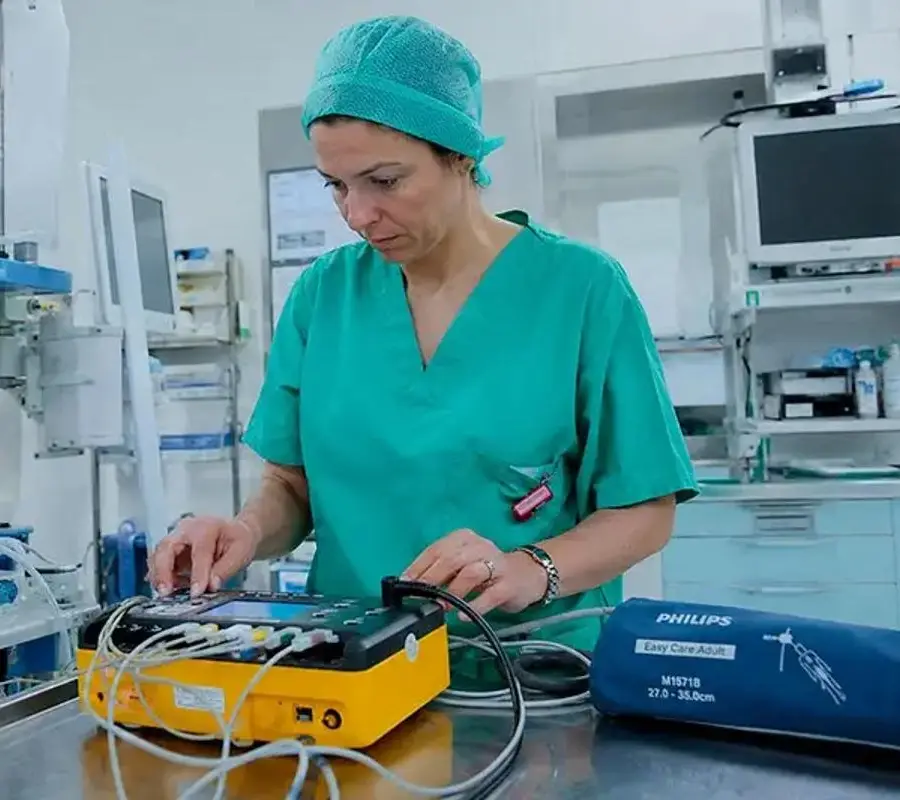












 to a trustworthy offer for healthcare centres.


From designing packaging that works on the shelf to a commercial and digital strategy that turns creative value into business.
+

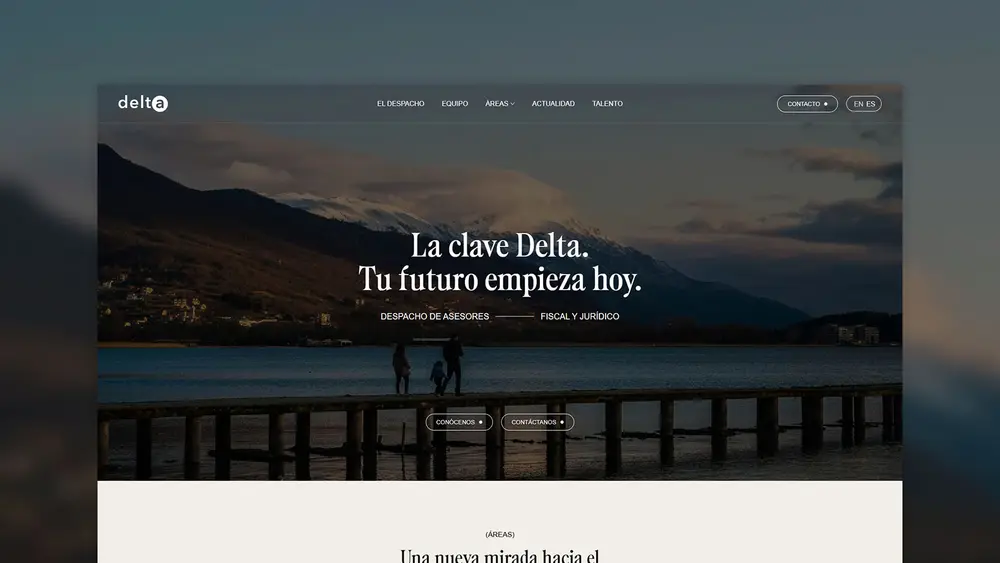
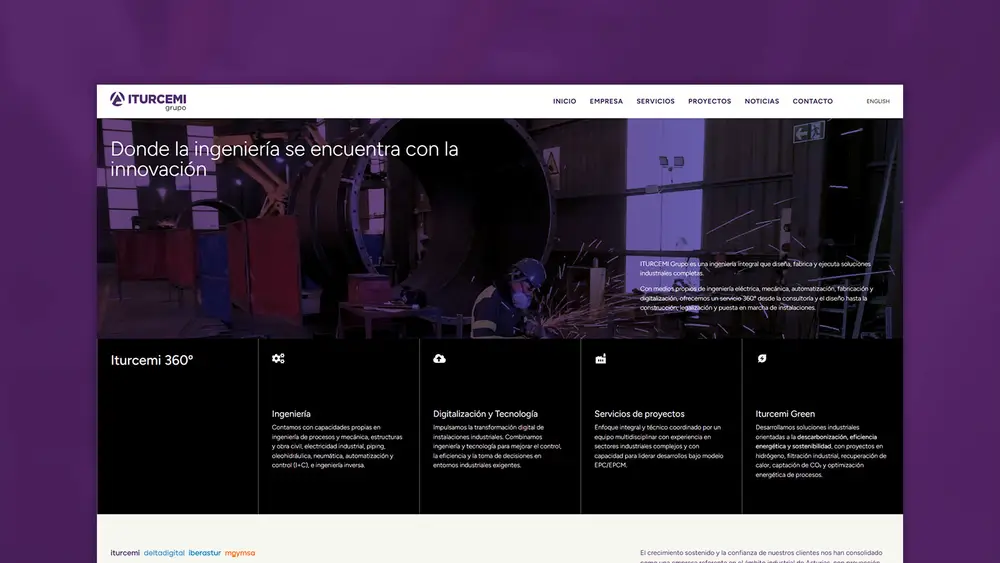
From several independent industrial lines to an engineering group with a shared story, structure and presence.
+

From manufacturing and distributing quality-control instruments to a system to organise identity, catalogues and international expansion.
+
From a Lean methodology that needed to stand out to a brand with authority, content and a digital strategy.
+
From a fast-growing intralogistics engineering firm to a brand system ready to integrate new companies.
+

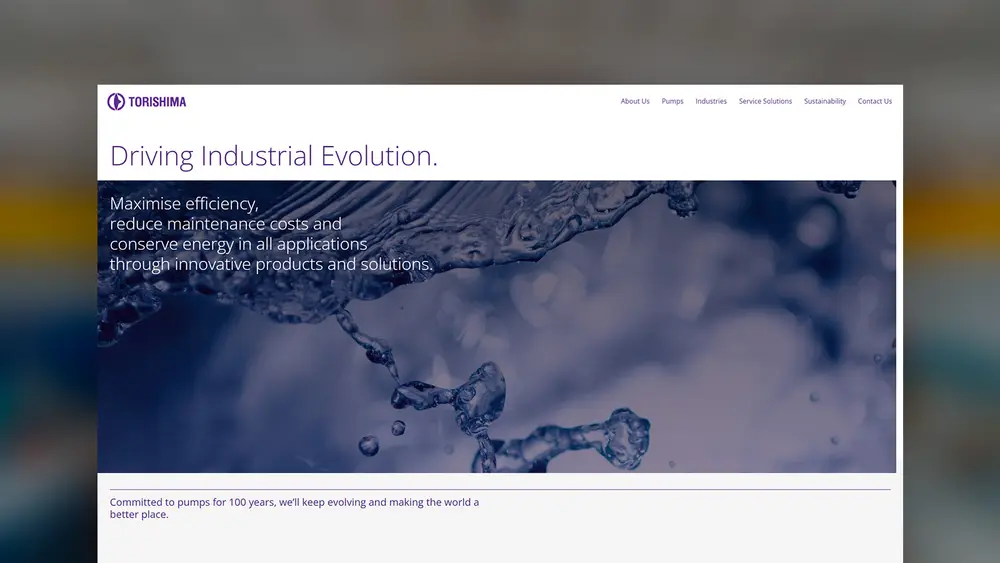
From a global industrial pump engineering firm to a digital presence that organises solutions, sectors and services.
+Frequently asked questions about AI SEO and GEO
What is AI SEO?
It is the work of appearing, and appearing accurately described, in the answers produced by tools such as ChatGPT, Gemini, Perplexity or Google’s AI mode. Unlike a classic search engine, which returns a list of links for the user to choose from, a model returns one answer and cites few sources or none. The goal, therefore, is not to occupy a position but to be the source the model considers reliable enough to make a claim about your sector.
What is GEO or Generative Engine Optimization?
GEO, or Generative Engine Optimization, means preparing content to increase the chances of appearing in AI-generated answers and conversational search engines. To do that, a website must offer clear answers, structured information, expert content, verifiable data and messages that are easy to interpret.
Does GEO replace SEO?
No, it leans on it. Almost everything that helps a model understand a website better —speed, clear structure, marked-up data, content that answers specific questions— is also what helps a search engine understand it better. What changes is the measure of success: SEO measures a position, GEO measures whether you are cited and how you are described. In practice they are worked on together, because they share almost the entire technical base.
How can a website appear more often in AI search?
To improve its presence in AI-assisted search, an industrial website must answer specific questions, structure its pages well, explain services and capabilities precisely, include useful technical information, work on use cases and demonstrate experience through clear, reliable content.
What is the llms.txt file, and do we need one?
It is a plain text file at the root of the domain summarising, in clear language, what the company is and where the relevant information lives, meant to be read by language models. It is not a mandatory standard and guarantees nothing on its own, but it is cheap to produce and has stopped being a curiosity: the PageSpeed agentic browsing audit now checks whether it exists and whether it follows the guidance.
Can you measure whether AI is naming my company?
Yes, though not with the precision of a rank tracker. The method that works is systematic asking: a fixed set of questions about your sector, your products and your competitors, repeated at intervals, noting whether you appear, which words describe you and who gets named instead. It is handmade, but it gives a real trend and it catches the moment a model says something inaccurate about you.
How long does GEO work take to show?
It depends on how much public information exists about the company to begin with. When the problem is that there is nothing to cite, changes can show within weeks, because models crawl often. When the problem is authority —better sources exist on the same topic— it is months of work, just as in SEO. We do not know anyone who can promise timescales seriously in this field, and you should be wary of anyone who does.
Is this only for large companies?
Quite the opposite: it is where a mid-sized industrial company has most to gain. In a sector where nobody has worked on their public information, the gap is wide open. The advantage does not come from budget but from specificity: a company that explains one technical niche well is more citable than a multinational speaking in general terms.
What does the free diagnosis include?
An assessment of your website with respect to AI and to your main customer: whether AI tools recognise and cite your site when discussing your sector, whether they clearly understand what you do and for whom, how your structure and markup stand, and the three to five highest-impact actions. We send it within 48-72 hours.
You can request it from contact, with no strings attached.