
Industrial lead generation: how to create sales opportunities in B2B
Industrial buyers research for weeks before making contact. What that means for industrial lead generation, which actions work in a sector with long cycles and several decision-makers, and why counting forms leads to the wrong conclusions.
Finding new customers has always been one of the biggest challenges for industrial companies. A few years ago, many business opportunities came from personal contacts, recommendations, sales visits and relationships built over time with distributors and suppliers.
All of these still matter. But the way companies search for, compare and select their suppliers has changed considerably.
Today, when a purchasing manager needs to find a manufacturer, an engineering director looks for a solution to improve a production process, or a company wants to bring in a new international supplier, much of the research takes place well before the first sales conversation.
And this is where B2B lead generation becomes particularly relevant.
After all, winning industrial customers means understanding how they make decisions, what information they need and what makes a company worth considering as a potential supplier.
Today's industrial buyers do their research before getting in touch
Back in 2021, we talked about how the pandemic had accelerated the digitalisation of business relationships. Five years later, what began as an exceptional situation has become part of the way companies buy.
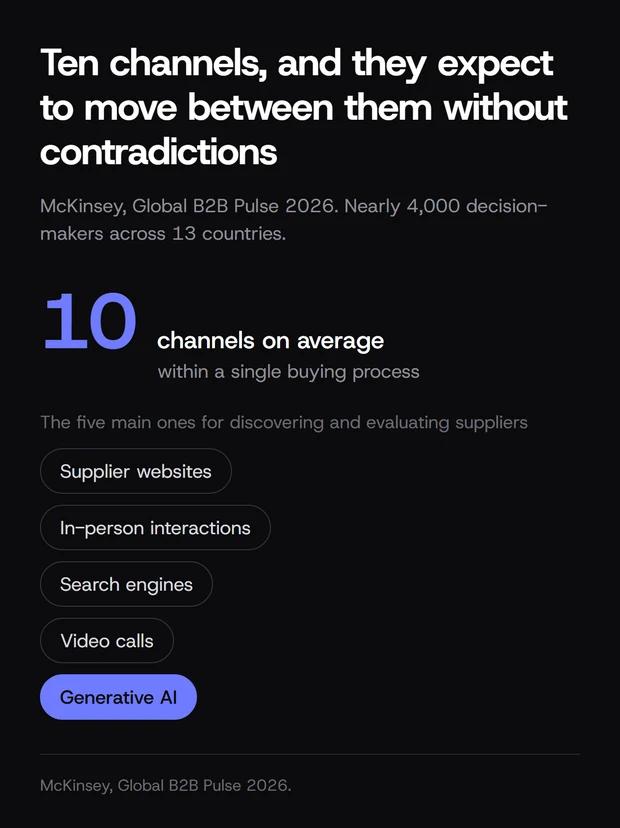
A McKinsey study published in 2026, based on nearly 4,000 B2B decision-makers across 13 countries, found that buyers use an average of ten different channels during their purchasing process.
These include supplier websites, online searches, sales representatives, self-service platforms and other forms of interaction. Buyers move between them depending on what they need at any given moment.
There's another particularly interesting finding.
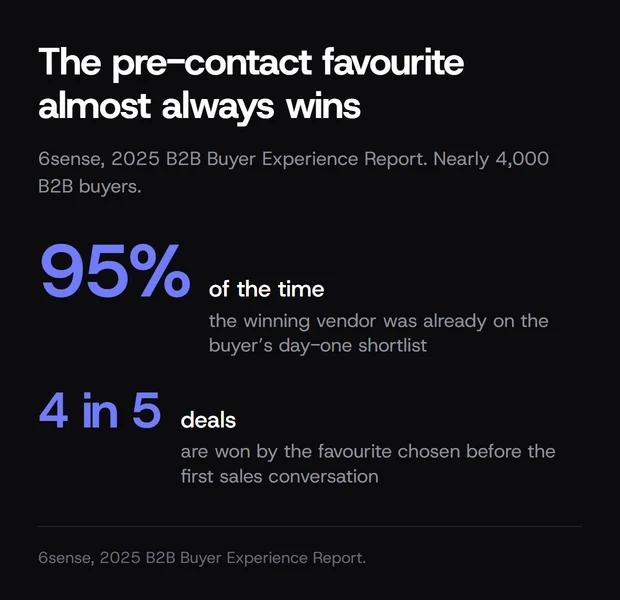
According to 6sense's 2025 B2B Buyer Experience Report, 95% of the time the winning vendor was already on the buyer's day-one shortlist, and four out of five deals are still won by the pre-contact favourite.
Although these figures come from a broad sample of B2B purchases rather than exclusively from the Spanish industrial sector, they reveal a purchasing behaviour worth paying attention to.
By the time a potential customer contacts a company, they may already have spent weeks or months researching it. And its competitors.
They may have reviewed technical specifications, checked certifications, compared manufacturing capabilities or spoken to other professionals in the industry.
In many cases, the first sales conversation happens when the buyer already has a fairly clear idea of what they need and who might be able to provide it.
That's why an important part of winning new customers happens before anyone requests a quote.
What is B2B lead generation?
B2B lead generation is the process through which a company attracts, identifies and establishes contact with other businesses that may be interested in its products or services.
In the industrial sector, that interest can take many different forms.
Think of a company that manufactures machinery components. One potential customer might visit its website looking for information about materials, manufacturing tolerances or production capabilities. Another may be interested in its certifications for a particular market. A third might need to find a supplier capable of handling a specific production requirement.
All three have needs related to the company's business, but their commercial situations are quite different.
The first may be carrying out some initial research. The second could be evaluating suppliers. And the third may already have a project that needs to be resolved in the short term.
Understanding these differences is essential for making B2B lead generation commercially meaningful.
A lead might represent an interesting business opportunity, but it could also be a contact that is unlikely ever to become a customer. The difference depends on factors such as how well the company fits our offering, its purchasing capacity, its actual needs and where it stands in the buying process.
Which brings us to a question worth asking before investing in any campaign: what kind of customer are we trying to attract?
Understanding industrial buyers is still the starting point
One of the defining characteristics of B2B markets is that purchasing decisions often involve several areas of an organisation.
When an industrial company brings in a new supplier, it may be putting its production capacity, delivery schedules, product quality or even its relationships with its own customers on the line.
That's why several people are often involved in the decision.
The engineering department needs to make sure the solution meets the technical requirements. Purchasing examines costs and supply conditions. Production is concerned about operational continuity. And management may assess how the decision will affect the company's growth or competitiveness.
Each of them looks at a potential supplier from a different perspective.
Imagine we manufacture automation systems for packaging lines. We may have an excellent technical solution, but that alone doesn't guarantee our company will be selected.
The production manager will want to know how reliable it is. The engineering team will need to understand how it integrates with existing equipment. Purchasing will analyse costs and delivery times. And management will want to know how the investment affects profitability.
B2B lead generation begins long before someone fills in a contact form. It starts with understanding what each of these people needs to know before considering our company as a supplier.
This also helps explain why industrial sales relationships often take time to develop.
In certain industries, switching suppliers involves testing, approvals, audits or changes to production processes. All of this affects both the length of negotiations and the way we need to communicate our value proposition.
How to generate B2B leads in industrial companies
Once we understand our potential buyers, we need to make it easier for them to find us and give them good reasons to take an interest in our company.
This is where different industrial marketing activities come into play. When approached properly, they can help create new business opportunities.
Being visible when a customer looks for a solution
Let's take an example.
A food processing company needs to find a machinery manufacturer for a new production line. There's a good chance it will start by searching Google for specialist suppliers, available solutions or information about particular manufacturing processes.
What will it find?
If our company offers exactly what it needs, but our website barely explains our capabilities, applications or the problems we can solve, we're missing an opportunity to make it onto its supplier shortlist.
An SEO strategy focused on the industrial market helps improve visibility for the searches potential buyers are making.
And it's worth paying attention to the language they actually use.
A manufacturer may describe its product using a very precise technical term, while potential customers search using different words related to the application, the problem or the result they want to achieve.
Understanding that language helps identify valuable search opportunities, even when search volumes are relatively low.
In fact, in highly specialised industrial markets, a handful of visits from companies that match our ideal customer profile can be far more valuable than hundreds of visits from people with no intention of buying.
A website that helps buyers evaluate us as a supplier
A company's website plays an important role in B2B lead generation because it's often one of the first places buyers go to learn more about a potential supplier.
And there's a fairly common problem among industrial companies: we know our products inside out, so we tend to assume that everyone visiting our website does too.
We come across websites full of corporate information, photographs of facilities and general descriptions of services, but with very little explanation of how their solutions are actually used.
Sometimes, essential information is missing: materials, production capabilities, application sectors, certifications, quality processes or experience with similar projects.
An industrial website should help visitors find answers to their questions.
If someone is looking for a supplier to manufacture a component with specific characteristics, they need to establish quickly whether our company can do the job.
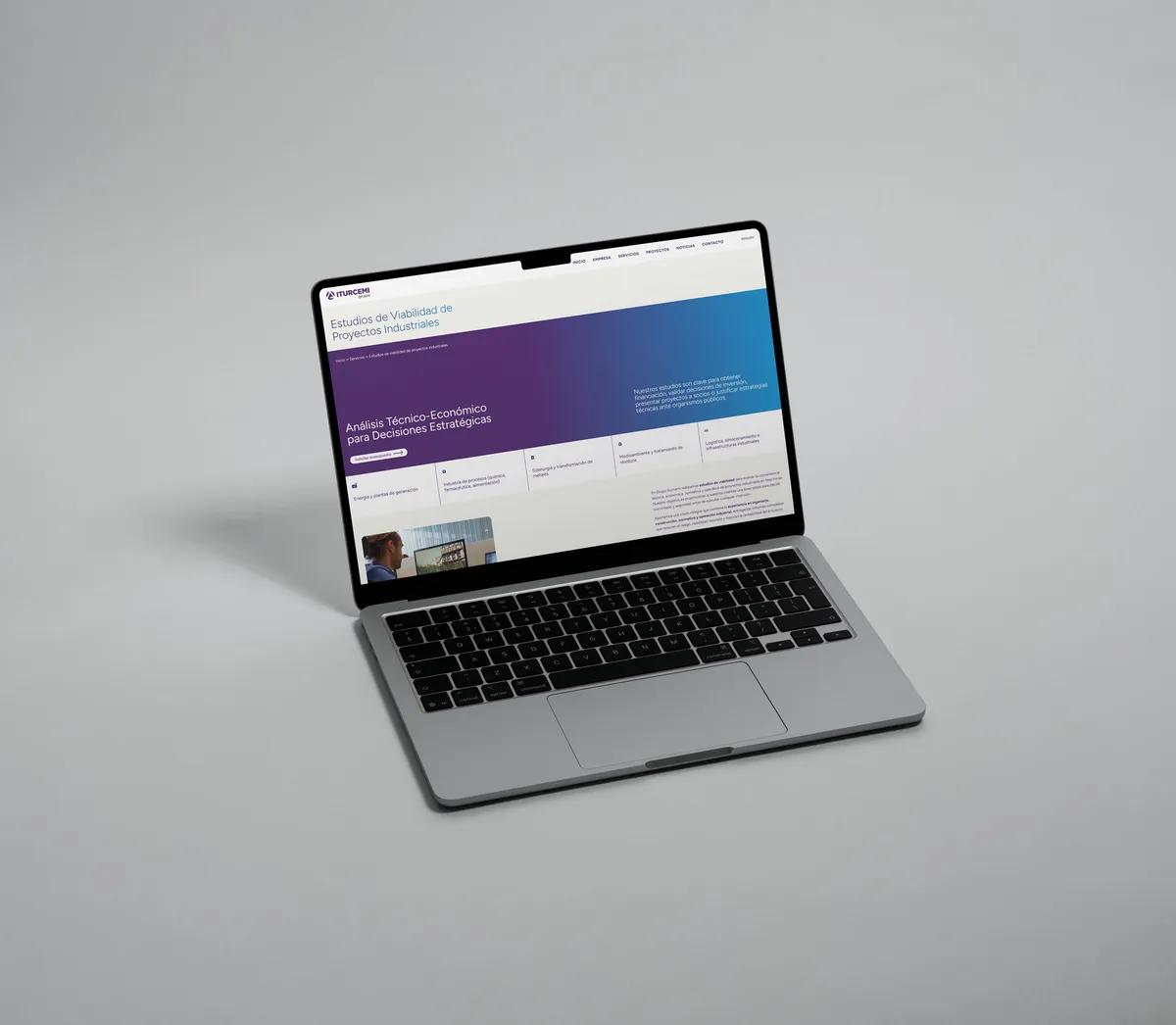
And if they want to request information, they should be able to do so without navigating an endless contact form or searching through several pages for a phone number.
It may seem like a small detail, but making information accessible and getting in touch straightforward can have a real impact on the business enquiries a company receives.
Content that answers buyers' real questions
Specialist content can help an industrial company improve its visibility and demonstrate its industry knowledge.
But what should we write about?
The answer is often closer than we think: the questions our salespeople regularly receive, the doubts customers raise during factory visits, or the problems our engineering department helps them solve.
Imagine a company that manufactures metal surface treatment solutions.
It could publish content about the factors affecting corrosion resistance, explain the differences between certain treatments or show how its solutions are used in different industrial environments.
This kind of content helps connect with professionals who are researching a specific need.
It also provides an opportunity to share knowledge that would be difficult to fit into a product datasheet.
Technical articles, application case studies, specialist guides and videos showing manufacturing processes can become valuable resources for buyers comparing suppliers.
However, there's one temptation worth resisting: creating content simply because a particular keyword attracts a lot of searches.
If those searches come from students, private consumers or professionals who would never buy our products or services, they're unlikely to help us win new customers.
Our content should answer the questions being asked by the companies we actually want to work with.
LinkedIn and professional relationships
LinkedIn can also contribute to B2B lead generation, particularly when we're dealing with products or services where purchasing decisions require trust and specialist knowledge.
It's worth combining the company's presence with the activity of its own professionals.
An engineering director who explains how a manufacturing problem was solved may attract interest from people facing similar challenges. Likewise, a sales director who shares insights about an international market may build relationships with future customers or partners.
These conversations can be valuable far beyond the visible engagement on a post.
Someone might follow a company's activity for months, look through its projects and remember its name when a need arises.
We can also use advertising campaigns aimed at specific professional profiles, industries or companies. But those campaigns need to start with a clear commercial proposition and offer information that's genuinely relevant to the audience.
Getting someone to see an advert can be relatively straightforward. Getting them to consider our company as a serious option takes considerably more work.
Lead generation campaigns focused on specific needs
Search advertising and other digital channels can be useful when we want to reach companies that are actively looking for a solution or a new supplier.
For example, a manufacturer of custom industrial equipment could develop campaigns around specific applications, types of machinery or production requirements.
The choice of search terms is particularly important.
In some markets, a broad keyword may attract plenty of traffic but generate very few opportunities. A highly specific technical search, on the other hand, could be far more valuable because it reflects a clearly defined need.
Campaigns also need a landing page that addresses that need.
If someone is looking for a specialist supplier for a particular industrial process, sending them to a generic corporate homepage may make it harder to establish contact. A page explaining the company's relevant capabilities and making it easy to request information is more likely to generate a useful enquiry.
The aim is to connect what a potential customer is looking for with an appropriate response from our business.
Turning website visits into sales opportunities
There's one figure that can be particularly misleading when analysing an industrial company's marketing results: the number of contacts generated.
Imagine a campaign that produces thirty enquiries in a month.
At first glance, that might look like an excellent result. But what happens if twenty come from companies that don't fit our business, five are looking for products we don't manufacture, and the remaining five are still exploring possible solutions?
Now consider another campaign that generates only six enquiries, four of which come from companies with a specific need, purchasing capacity and a project we can realistically deliver.
Which campaign performed better?
The answer depends on how those opportunities develop, their potential value and the cost of acquiring them.
That's why measuring B2B lead generation solely by the number of forms submitted or contacts received can lead to the wrong conclusions.
We need to understand what happens after an enquiry comes in.
Has someone followed up with the interested company? Does its need match our products or services? Has it requested a proposal? Has it become a genuine sales opportunity? And has it eventually become a customer?
Answering these questions requires cooperation between marketing and sales.
In industrial companies where the sales team has direct contact with the market, its knowledge is particularly valuable. Salespeople know which enquiries have real potential, what objections arise during negotiations and what characteristics the best customers tend to share.
That information should help improve campaigns, content and the website itself.
Similarly, marketing data can help the sales team identify new industries, applications or markets where interest in their solutions is emerging.
When both teams share information, it's easier to understand which activities are genuinely contributing to business growth.
B2B lead generation and international expansion
For many Spanish industrial companies, finding new customers also means expanding into international markets.
And that brings its own challenges.
A company with a well-established position in Spain may be almost completely unknown in Germany, France or the United States.
Even if its products are competitive, it still needs to raise its profile and demonstrate its ability to work with customers in those markets.
B2B lead generation can help identify international opportunities, but it requires an understanding of how businesses buy in each country.
Translating the website is usually a first step, although there's considerably more to it than language.
The searches buyers make may be different, as may their expectations regarding technical information, certifications, lead times or the level of service they expect from a supplier.
We also need to consider whether we're targeting manufacturers, distributors, system integrators or engineering companies, as each may have very different commercial needs.
For example, a Spanish manufacturer of machinery components might discover demand in another country for a particular application that has received little attention in its home market.
Research into search behaviour, competitors and market characteristics can help identify that opportunity and develop communications aimed at the right companies.
In these situations, digital lead generation can complement the work of sales teams and support entry into new markets.
Artificial intelligence is also changing how buyers find us
Traditional search engines have been joined by new ways of researching industrial suppliers and solutions.
Artificial intelligence tools allow buyers to look up information, compare alternatives and get answers to technical or commercial questions.
A buyer might use them to identify manufacturers of a particular component, understand the differences between technologies or draw up an initial shortlist of potential suppliers.
This creates a new situation for B2B companies.
The clarity of the information we publish, the consistency of our data and our company's presence in reliable sources may influence how our solutions appear when someone makes these kinds of enquiries.
However, expectations need to remain realistic.
Being mentioned by an AI tool doesn't guarantee that we'll receive a business enquiry. Nor do we yet know exactly how far these new habits will change every industrial purchasing process.
What does make sense is ensuring that information about our capabilities is accessible, understandable, accurate and up to date.
That's useful for search engines, AI tools and, most importantly, the people evaluating our company as a potential supplier.
How can we tell whether our B2B lead generation strategy is working?
In industrial markets, a sales opportunity can take months to turn into an order.
That's why evaluating results means looking beyond what happened over the past few weeks.
Website traffic, enquiries received and acquisition costs can help us understand how our marketing activities are performing. But we also need to assess lead quality, the opportunities reaching the sales team and the projects that eventually turn into revenue.
It's also worth looking at where our best customers come from.
We might discover that certain specialist articles attract relatively little traffic but are regularly consulted by companies with significant purchasing potential.
Perhaps a campaign focused on a very specific industry generates fewer enquiries than a more general one, yet produces opportunities of greater value.
Or we may find demand for our products in markets that weren't initially considered a priority.
All this information helps us make better decisions and direct our investment more effectively.
There's another factor worth considering: the profitability of each new customer.
In an industrial business, the value of a commercial relationship may extend over several years and include repeat orders, new developments or larger projects.
A B2B lead generation strategy should therefore also be assessed in terms of the business it can deliver over the medium and long term.
Winning industrial customers starts with becoming a relevant option
The way companies buy has evolved, but some things still carry considerable weight in industrial business relationships.
Customers need reliable suppliers who understand their problems, honour their commitments and provide competitive solutions.
Experience, references, technical knowledge and trust remain important factors. What has changed is the amount of information buyers can access before having a conversation with us.
And the opportunities we have to reach companies that don't yet know who we are.
B2B lead generation helps us establish that connection, increase our visibility and create new business opportunities. To make it work, we need to know which companies we want to reach, what problems we can solve and why they should consider us as a supplier.
At saKudarte, we work with industrial and B2B companies to turn their market knowledge into marketing strategies focused on generating real sales opportunities.
Because ultimately, the question every industrial company should be asking itself is quite simple:
When a potential customer is looking for a supplier like us, do we have a realistic chance of making it onto their shortlist?
And once they find us, are we giving them enough reasons to get in touch?
If you'd like to explore how to attract more customers to your industrial business, let's talk about your B2B marketing strategy.
Frequently asked questions about industrial lead generation
How long does industrial lead generation take to produce results?
Longer than people usually expect. In industrial markets an opportunity can take months to turn into an order, and switching supplier often involves testing, approvals or audits. That is why results are not judged by what happened over the past few weeks, but by following which enquiries arrive, which ones progress and which ones end up as business.
How many leads a month does an industrial company need?
There is no figure that works for everyone, and chasing one tends to lead to the wrong conclusions. Thirty enquiries of which twenty do not fit our business are worth less than six of which four come from companies with a specific need, purchasing capacity and a project we can realistically deliver. What is worth defining is not a number of leads, but the kind of company we want to hear from.
Does LinkedIn work for winning industrial customers?
It can help, particularly when the purchasing decision requires trust and specialist knowledge. It works best when the company’s presence is combined with the activity of its own professionals: an engineering director explaining how a manufacturing problem was solved is of interest to anyone facing the same problem. And it is worth not measuring it by visible engagement alone, because someone may follow a company for months and remember it when a need arises.
How do you tell whether a lead is a real opportunity?
By how well it fits what we do, the company’s purchasing capacity, its specific need and where it stands in the buying process. Someone asking for general information is not in the same situation as someone with a project to resolve in the short term. Telling them apart means talking to the sales team, who know which enquiries have real potential and what objections come up later.